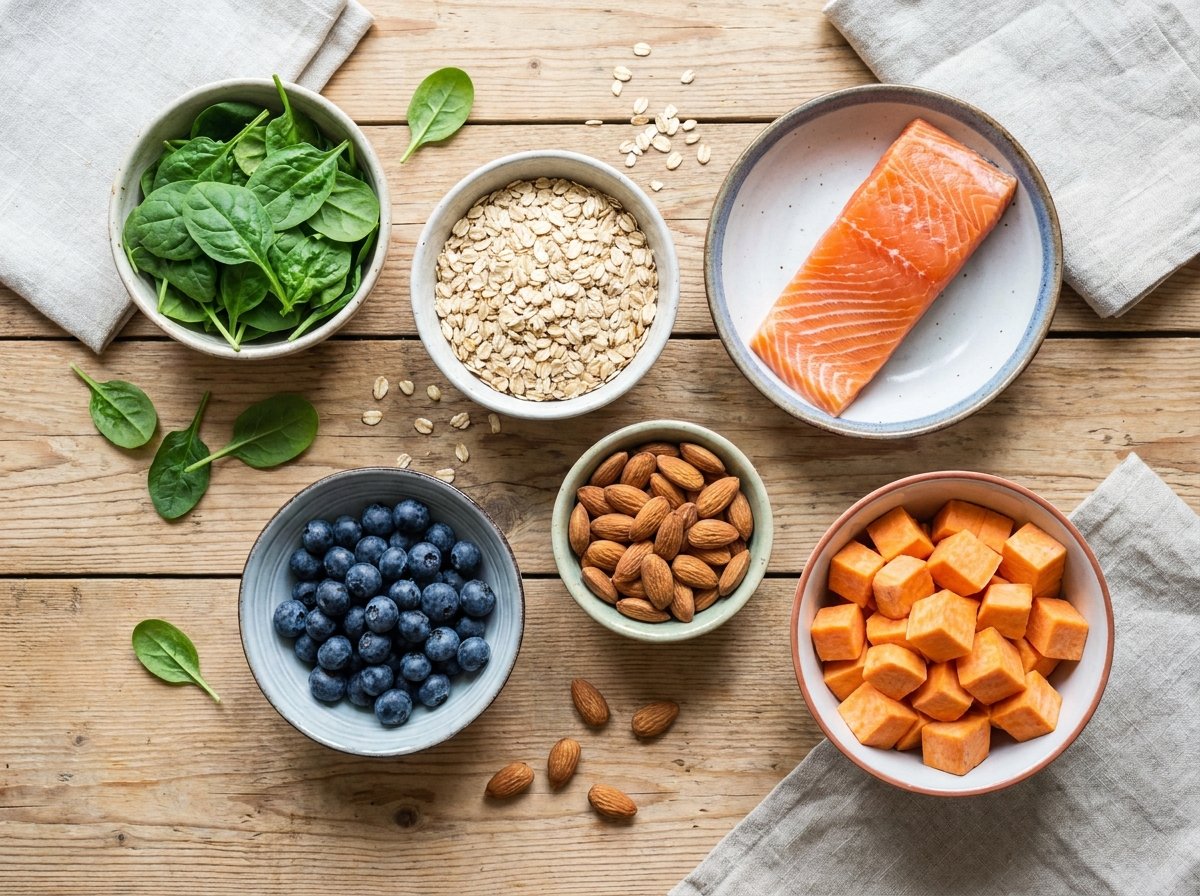
What Energy From Food Actually Means
When people look for food that gives them energy, they usually want to stop feeling tired by the middle of the day. They want food that gives them energy without a crash. Food does not work like a shot of caffeine. It works by keeping your blood sugar stable, giving your body the iron and B vitamins it needs to produce energy, and keeping you hydrated. The food that helps the most is the food that prevents your energy from dipping, not the food that promises a burst of energy. Energy from food is what people need to get through their day.
Iron Rich Foods For Tiredness
Not having enough iron is one of the causes of daily tiredness, especially in people who do not eat much red meat. Spinach, lentils and pumpkin seeds are sources of iron from plants. Eating them with foods that have vitamin C, like citrus or bell peppers, helps your body absorb the iron better. Lentils are particularly useful because they have iron, protein and fiber, which slows down digestion and prevents the sugar spike that makes you tired an hour later. Iron rich foods like these can make a difference.
Red meat and liver are still good sources of iron for people who have a diagnosed deficiency. For people who want to get their iron from food, eating lentil soup or a spinach and lentil curry a few times a week can make a noticeable difference over several weeks.
Complex Carbohydrates That Prevent The Afternoon Crash
Eating carbs like bread or sugary snacks causes a rise and fall in blood sugar, which is what makes you feel heavy and foggy after lunch. Complex carbohydrates like oats, quinoa, sweet potatoes and brown rice release glucose slowly, giving you a steady supply of energy. Oats have a kind of fiber that helps keep your blood sugar stable throughout the morning when you eat them for breakfast. Complex carbohydrates are very good for energy.
Swapping one carb meal a day for a complex carb option can be more effective for daytime energy than taking any supplement. Sweet potatoes also have potassium, which helps your muscles and nerves work properly, making you feel more capable and less drained.
B Vitamin Sources For Energy Production
B vitamins like B12, B6 and folate are important for how your body converts food into energy. Eggs, salmon and nutritional yeast are sources of B vitamins. People who eat plant-based diets are more likely to have low B12 levels because it is mainly found in animal products, which is why they often need to take supplements or eat fortified foods. B vitamins are very important for energy production.
Salmon has the added benefit of omega 3 fatty acids, which can help reduce inflammation and improve your mood, making you feel more energetic.
Hydrating Foods People Forget About
Dehydration is a cause of low energy, and it does not always make you feel thirsty. Foods like cucumber, watermelon, oranges and celery have high water content. They also have electrolytes like potassium, which help with hydration. This is especially important in hot climates or for people who work demanding jobs. Hydrating foods are very important.
Adding a piece of fruit with water content to your midday meal is a way to support hydration without having to track your water intake.
Nuts And Seeds For Sustained Energy
Foods like almonds, walnuts and chia seeds combine fats, protein and fiber, which means they digest slowly and do not cause blood sugar spikes. Eating a handful as a mid-morning or mid-afternoon snack can prevent the energy dip that makes you reach for sugary alternatives. Chia seeds soaked in liquid overnight can also be a breakfast option that keeps your energy steady until lunch. Nuts and seeds are very good for energy.
The magnesium in almonds and pumpkin seeds also helps with muscle function and sleep quality, which affects how rested and energetic you feel the next day.
Building These Foods Into Your Routine
People try to change their diet all at once, but a more realistic approach is to pick two or three foods from this list and add them to your meals. Adding lentils to a soup you already make, swapping rice for quinoa twice a week, or keeping almonds at your desk instead of a candy bar are small changes you can stick to. Food and energy go hand in hand.
These foods are not a replacement for getting enough sleep or managing stress. They can help remove one variable that commonly contributes to fatigue. Combining them with hydration and stable meal timing can genuinely support energy throughout the day without relying on caffeine or sugar.
Frequently Asked Questions
What is the way to feel more energetic through food?
Foods with carbohydrates paired with protein, like oats with eggs or a lentil bowl, tend to work faster than other foods because they stabilize your blood sugar immediately. A piece of fruit with nuts is a good option if you need something within minutes.
Can these foods replace caffeine for energy?
They can reduce your reliance on caffeine by preventing the blood sugar crashes that make you reach for coffee. They do not produce the same stimulant effect, so most people find they need less caffeine over time rather than none at all.
Are these foods only effective if eaten in large quantities?
No, consistency matters more than quantity. Eating a serving of iron-rich or complex carb foods tends to be more effective long-term than eating large amounts occasionally.
Do these foods help with energy if fatigue is caused by lack of sleep?
Food can support energy levels, but it cannot fully compensate for sleep. If fatigue persists despite a good diet, sleep quality and duration should be addressed directly.
How long does it take to notice a difference from eating more of these foods?
Most people notice energy differences within one to two weeks, especially with iron and complex carb sources. Larger shifts can take several weeks and may require a blood test to confirm improvement.