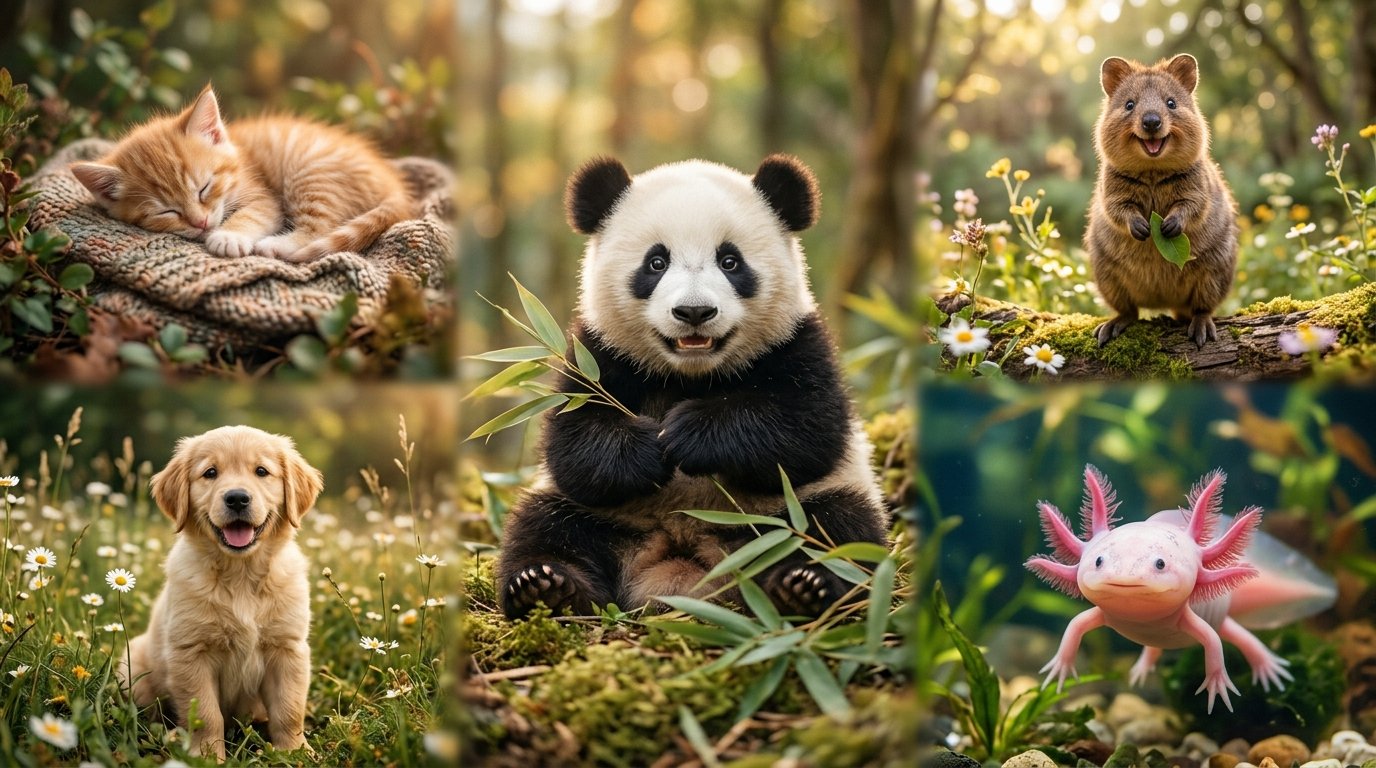
Why Cute Animals Feel So Instantly Comforting

Human brains are wired to respond to features like large eyes, round faces, and small proportions. These traits activate caregiving instincts, even when there is no real responsibility involved. That’s why a photo of baby animals can feel strangely calming after a stressful day.
The brain doesn’t analyze cuteness, it reacts to it before logic even enters the picture.
There’s also a deeper layer most people miss. Animals that appear harmless or fragile trigger a protective response rooted in early human survival patterns. Soft textures, slow movements, and gentle expressions all reinforce that feeling.
A lesser known detail is how timing affects perception. Studies in animal behavior observation show that people rate the same animal as “cuter” when it is in motion, especially during playful or clumsy actions. A panda rolling or a puppy stumbling increases emotional engagement far more than a static image.
That natural reaction explains why videos of cute animals often outperform still photos. Motion adds personality, and personality builds connection. From here, the fascination naturally leads toward specific baby animals that seem almost designed to steal attention.
Image Note: A warm close up scene of a baby panda slowly rolling on soft grass in natural daylight. The lighting should feel gentle and slightly golden to enhance emotional warmth and innocence.
Baby Cute Animals That Steal Attention Every Time

Few things in nature compete with the charm of baby animals. A puppy trying to walk for the first time or a kitten chasing its own tail creates a kind of visual honesty that feels refreshing in a structured world. Their unpredictability is part of the appeal.
Baby animals stand out because their behavior feels unfiltered and completely genuine.
Think of baby elephants learning to use their trunks, often swinging them like unfamiliar tools. Or sea otters floating on their backs while holding tiny paws together. These moments are not staged, yet they look almost designed for emotional impact.
Another overlooked detail is proportion mismatch. Baby giraffes, for example, grow into their long legs gradually, which creates an awkward but endearing balance during early life stages. That temporary imbalance is exactly what the human brain interprets as cute.
Domestic animals like puppies and kittens dominate social media for a reason. Their expressions closely resemble human emotional cues, especially curiosity and surprise. That familiarity makes them easy to understand without explanation.
The fascination with baby animals doesn’t stop at common pets. Wildlife sanctuaries often report that visitors spend the most time near younger animals, even when larger or rarer species are present nearby. The pull is almost instinctive, leading naturally to lesser known creatures that carry the same effect in unexpected ways.
Image Note: A soft focused wildlife sanctuary scene showing a baby elephant gently touching water with its trunk beside its mother. The mood should feel peaceful, natural, and emotionally grounding.
Cute Animals You Rarely See But Never Forget

Some of the most memorable cute animals are not the usual ones found in everyday conversations. Quokkas, often called the happiest animals on earth, carry a permanent smile-like expression that makes them instantly photogenic. Their calm curiosity toward humans adds to their appeal.
Rare species often feel even cuter because they appear unfamiliar yet emotionally readable.
Fennec foxes are another example, with oversized ears that seem exaggerated but perfectly functional for desert survival. That contrast between practicality and appearance creates a unique kind of admiration.
Axolotls, aquatic salamanders with soft external gills, appear almost cartoon-like in real life. Their slow movements and permanent juvenile appearance make them stand out in any discussion about adorable creatures. Unlike many animals, they maintain their youthful look throughout life.
Even lesser known rodents like the pika, living in rocky mountain regions, attract attention through tiny size and quick, nervous movements. Their behavior feels expressive, almost like a visual language of alertness and curiosity.
What makes these animals unforgettable is not just appearance but rarity of encounter. The less often something is seen, the stronger the emotional imprint becomes when it is finally observed. That emotional imprint connects directly to the deeper question of why humans find certain creatures universally appealing.
Image Note: A natural outdoor shot of a quokka standing calmly in soft sunlight with a slightly blurred green background. The expression should look gentle and approachable, highlighting its natural “smiling” face.
What Makes Certain Cute Animals Universally Adorable
Across cultures, people respond similarly to specific traits in animals, even without shared language or background. Rounded features, soft fur, and slow movements consistently trigger positive emotional responses. These patterns appear across both domestic pets and wild species.
Universally cute animals share visual traits that the human brain associates with safety and comfort.
Symmetry also plays a subtle role. Faces and bodies that appear balanced tend to feel more pleasant to look at, even if observers are unaware of it. That’s why many people find pandas and seals particularly charming despite never interacting with them in real life.
Another factor is behavior unpredictability. Animals that display playful curiosity rather than constant alertness tend to feel more engaging. A fox exploring its surroundings or a kitten reacting to a new object creates a sense of shared discovery.
Environmental contrast adds another layer. Seeing delicate animals in vast natural landscapes enhances their perceived vulnerability, which strengthens emotional response. A small penguin walking across ice or a hedgehog crossing dry grassland creates a visual story without words.
Over time, these reactions shape how humans connect emotionally with nature. Cute animals are not just visual entertainment, they act as quiet reminders of simplicity in a complex world.
Conclusion
Cute animals carry a strange kind of power that doesn’t rely on explanation or effort. A single glance can shift mood, slow thought, and create a moment of calm that feels surprisingly real.
That connection is not accidental. It comes from deeply rooted visual cues, emotional memory, and natural behavior patterns that speak directly to human instinct. Even in a fast moving digital space, the appeal of cute animals remains constant, steady, and universally understood.
Frequently Asked Questions
Why do people react so strongly to cute animals ?
The reaction comes from instinctive brain responses to soft features and small proportions. These traits signal safety and trigger caregiving emotions even without real interaction.
Which cute animals are most popular worldwide ?
Puppies, kittens, pandas, and otters consistently rank at the top due to their expressive faces and playful behavior. Their familiarity also makes them widely shared online.
Are wild cute animals different from pets in appeal ?
Wild species often feel more special because they are rare to observe. That rarity adds emotional weight to the experience of seeing them.
Why do baby animals look cuter than adults ?
Baby animals have exaggerated features like large eyes and round heads. These traits naturally activate human emotional responses linked to protection.
Can watching cute animals improve mood ?
Yes, viewing adorable animals can reduce stress and create a calming effect. The brain responds positively to their harmless and gentle appearance.
Read this to know 10 Incredibly Loyal Dog Breeds That Will Never Leave Your Side.