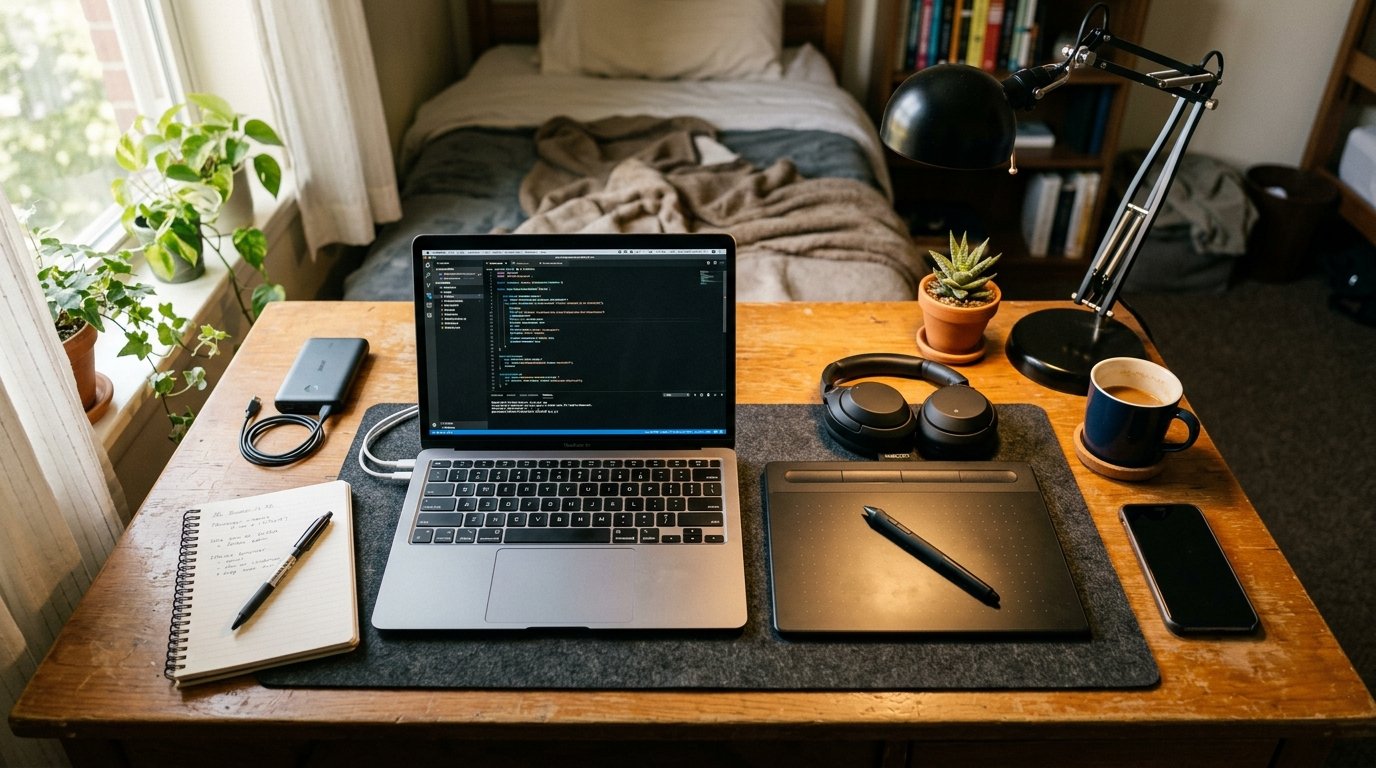
Walk into any lecture hall and you will notice the same pattern. Some students are calm, organized, and clearly in control of their workload. Others are scrambling for a charger, squinting at handwritten notes they can barely read, or missing half the lecture because their laptop is loading an update. The difference often comes down to a handful of gadgets for students that quietly remove friction from daily academic life. None of these require a huge budget, and none of them are gimmicks. They solve real, specific problems that come up constantly during a semester.
A Laptop That Matches Your Workload, Not Your Budget Alone
Buying the cheapest laptop available feels responsible until it starts crashing during finals week. The mistake most students make is shopping purely on price instead of thinking about what their coursework actually demands. A design or engineering student running CAD software needs far more processing power than someone writing essays in Google Docs. Battery life matters more than most people expect too, since outlets in lecture halls are limited and nobody wants to hunt for one between classes. A reasonable rule is to buy slightly more performance than you think you need, because software gets heavier every year and the laptop has to survive three or four years of use.
A Tablet With a Stylus for Note Taking That Actually Sticks
Typed notes are fast, but research on memory retention consistently favors handwriting because it forces the brain to process information rather than transcribe it. A stylus enabled tablet gives students the best of both, the physical act of writing paired with the ability to search, organize, and back up notes instantly. The overlooked benefit is annotation. Marking up a lecture slide or a PDF textbook chapter directly, rather than copying it into a separate notebook, saves a surprising amount of time during exam review.
Noise Cancelling Headphones for Focus, Not Just Music
Most students buy headphones for entertainment and only later realize how much they help with concentration. Libraries and dorms are rarely as quiet as people assume, and a good pair of noise cancelling headphones removes that background noise without needing music playing at all. The mistake to avoid is choosing style over function. Over ear models generally block more sound than earbuds and cause less fatigue during long study sessions, even though earbuds win on portability.
A Portable Charger That Can Survive a Full Day
A dead phone or laptop battery in the middle of a study group is more than an inconvenience, it can mean missing a shared document or losing access to notes right before a deadline. The gadgets for students that matter most are often the least exciting, and a reliable power bank fits that description perfectly. Look for one that can charge a laptop, not just a phone, since many cheaper models cannot handle the higher power draw.
A Mechanical or Compact Wireless Keyboard
Typing on a laptop keyboard for hours a day adds up, both in comfort and in speed. A separate keyboard, even a compact one that folds into a backpack, reduces strain and often improves typing accuracy once a student adjusts to it. This becomes especially useful for anyone writing long papers or coding regularly, where small efficiency gains compound over a semester.
A Multi Port USB Hub for a Dorm Desk
Modern laptops rarely include enough ports for a printer, an external drive, a monitor, and a phone charger all at once. A compact hub solves this without cluttering the desk with adapters. The detail most guides skip is checking wattage. A hub that cannot pass through enough power will slow down laptop charging rather than help it.
An External Hard Drive or Backup Drive
Cloud storage is convenient until a spotty campus network makes uploading a large file impossible right before a deadline. A physical backup drive is not glamorous, but losing a thesis draft to a corrupted cloud sync is the kind of mistake students only make once. Keeping coursework in two places, one local and one cloud based, is a habit worth building early.
A Smart Watch for Time Management Between Classes
Phones are full of distractions, which makes them a poor tool for quick time checks during a busy day. A smart watch that shows the next class, a timer, or a quick reminder keeps a student on schedule without pulling them into a notifications spiral. This matters more than it sounds, since checking a phone for the time often turns into ten minutes of scrolling.
A Compact Desk Lamp With Adjustable Light
Lighting affects focus more than most students realize. A warm, dim light encourages drowsiness, while a lamp with adjustable brightness and color temperature helps maintain alertness during evening study sessions without straining the eyes the way a harsh overhead light does.
A Wireless Mouse for Anything Beyond Basic Typing
Trackpads work fine for browsing, but anything involving spreadsheets, design software, or detailed editing benefits from a proper mouse. It is a small purchase that noticeably speeds up repetitive tasks.
A Streaming or Casting Device for Group Study and Downtime
Whether it is casting a presentation to a shared screen for a group project or unwinding with a show after a long study day, a small streaming device turns any dorm television into something more useful than cable ever was.
A Quality Water Bottle With a Built In Reminder
It sits slightly outside traditional tech, but smart bottles that track hydration have become popular for a practical reason. Long study sessions make it easy to forget basic needs, and a subtle reminder helps maintain focus and energy without much thought.
Choosing Gadgets for Students That Actually Get Used
The biggest waste of money in this category is not buying the wrong brand, it is buying a gadget that never leaves the box. Before purchasing anything, it helps to picture a normal Tuesday and ask whether the item solves a problem that actually happens that day. Gadgets for students work best when they remove a specific frustration rather than promising a vague productivity boost. Start with the two or three items that address your biggest daily annoyance, then build from there as the semester reveals what you genuinely need.
Frequently Asked Questions
What is the single most useful gadget for a student on a tight budget?
A reliable portable charger tends to offer the most value for the lowest cost, since a dead battery can derail an entire day regardless of major or course load.
Do smart watches actually help with studying?
They help indirectly by reducing the need to check a phone for the time, which often prevents the small distractions that turn into long scrolling breaks.
Is a tablet worth buying if I already have a laptop?
For students who take a lot of handwritten notes or annotate PDFs frequently, yes, since it covers a different function than a laptop rather than duplicating it.
How much should a student spend on headphones?
Mid range noise cancelling headphones in the moderate price bracket usually offer the best balance of comfort and effectiveness without paying for premium features most students will not use.
Should I buy gadgets before the semester starts or wait?
Waiting a few weeks is often smarter, since it becomes clear which specific tasks are causing friction once classes are actually underway.