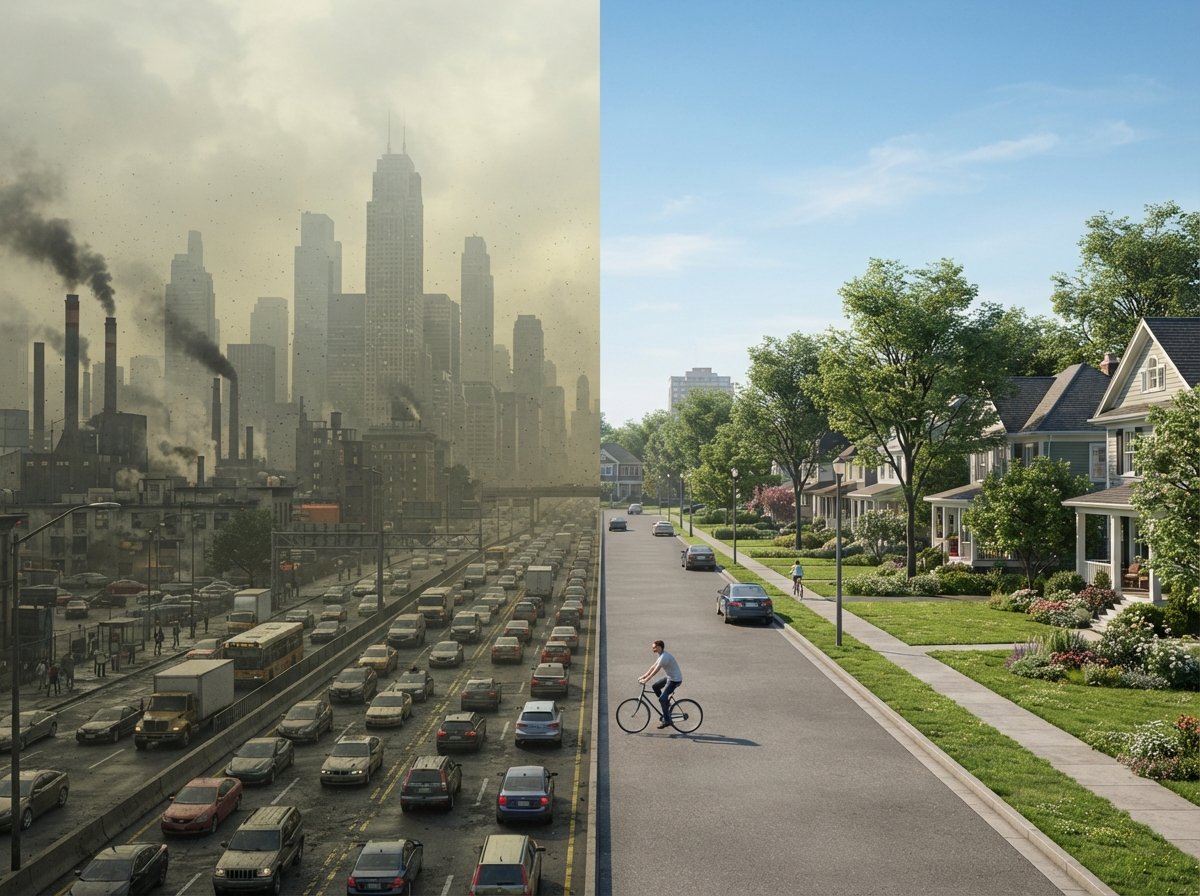
Most people think of pollution as something dramatic. Black smoke coming from a factory chimney, an oil slick spreading over the ocean, a river with an unnatural color. These pictures are not incorrect. They are not complete, though, and that is exactly why the real pollution effects on your body and your surroundings tend to be ignored. The damage that is most important is usually not seen, happens slowly, and is part of routines that no one questions.
Air You Breathe Without Thinking About

Every trip to work, every hour close to a road, every evening cooking over a gas stove adds a small amount of particulate matter to your lungs. Individually, none of it seems important. Together, it is one of the pollution effects on human health that we have the most information for. Long-term exposure to particulate matter is connected to lower lung function, worse asthma, and a clearly higher chance of heart disease. Cities with traffic do not just have foggy skies; they have higher numbers of people going to the hospital for breathing problems, and children living near big roads have slower lung growth than children just a few miles away.
The frustrating thing is how normal the exposure feels. No one notices particulate matter the way they would notice a chemical spill. It becomes part of life quietly, which is exactly why it is so easy to forget.
Water Pollution Effects You Can't Taste

Polluted water often does not look or taste wrong. That is what makes it dangerous. Runoff from farming, waste from factories, and old pipes add metals, pesticides, and increasingly, microplastics into drinking water. The health risks from water pollution happen over years of exposure rather than from one bad glass of water. Lead from pipes has been connected to learning and development problems in children, even at levels once thought to be safe. Microplastics, still being studied, are now found in blood and organs, and scientists are just starting to understand what that means in the long term.
This is also where pollution effects go beyond humans. Water ecosystems take in the harmful things, and the damage moves up the food chain and eventually ends up on our plates.
Soil and Food Chain Contamination

Soil pollution gets the least attention of the three, but it directly affects what ends up on your plate. Pesticide leftovers, factory waste, and heavy metals settle into farmland and get taken in by crops. Contaminated soil does not just hurt the area; it quietly goes into the food supply and builds up in the people who eat from it. Farmers working the soil face the direct exposure, but the effects spread out to anyone who buys food grown in affected areas.
Because soil pollution does not announce itself the way a polluted river does, it is rarely part of the conversation, even though it may be one of the direct ways pollution enters the human body.
The Pollution Effects Nobody Talks About

Noise and light pollution do not look like pollution, but the proof of their effects keeps growing. Long exposure to traffic and factory noise has been linked to stress hormones, disturbed sleep, and more heart problems, especially in big cities. Light pollution messes with natural sleep patterns and has other effects on mood and how the body works. These kinds of pollution are easy to ignore because they do not look harmful. The body still feels the stress.
Animals feel this too. Birds that fly at night, animals that are active when it is dark, and ocean life that depends on natural light and sound are being pushed out of their natural rhythm by constant noise and bright lights from people.
Why the Ignored Effects Matter Most

The pollution people worry about — oil spills, smog warnings, accidents — gets attention because it is visible and urgent. The pollution effects that actually affect health over time are the ones not discussed at dinner: the trip to work, the water from the tap, the vegetables in the store, the noise outside your window at night. None of these create alarm by themselves. Together, they add up to a loss of health that is much harder to fix than it was to stop.
Understanding this changes what it means to do something about pollution. It is not about supporting bigger environmental policies, though that is important. It is about realizing that the pollution effects that are most important are the ones that are too normal to notice, and that awareness is the first real step toward lowering your own exposure.
Frequently Asked Questions
What are the common pollution effects on human health?
The most recorded effects are breathing problems, heart disease, and learning issues in children, mostly linked to air and water pollution. Long-term, low-level exposure usually causes more harm than one big pollution event.
How does water pollution affect the body if the water looks clean?
Contaminants like metals, pesticides, and microplastics are often not visible and do not have a taste, so water can look safe while still being harmful. The effects usually happen over time instead of appearing right away.
Can soil pollution really affect people who do not work in farming?
Yes, because polluted soil passes things into crops, which then go into the food supply. Anyone eating vegetables grown in affected soil can be exposed, no matter where they live.
Is noise pollution actually harmful or just annoying?
Long-term noise exposure has been connected to stress hormones, disturbed sleep, and more heart problems. It is a health issue, not just a problem with how things sound.
What can a person actually do to lower their exposure to pollution effects?
Small actions include using water filters that remove metals, trying to spend less time near busy roads, and paying attention to where food comes from. These steps won't stop all exposure, but they can make a big difference.