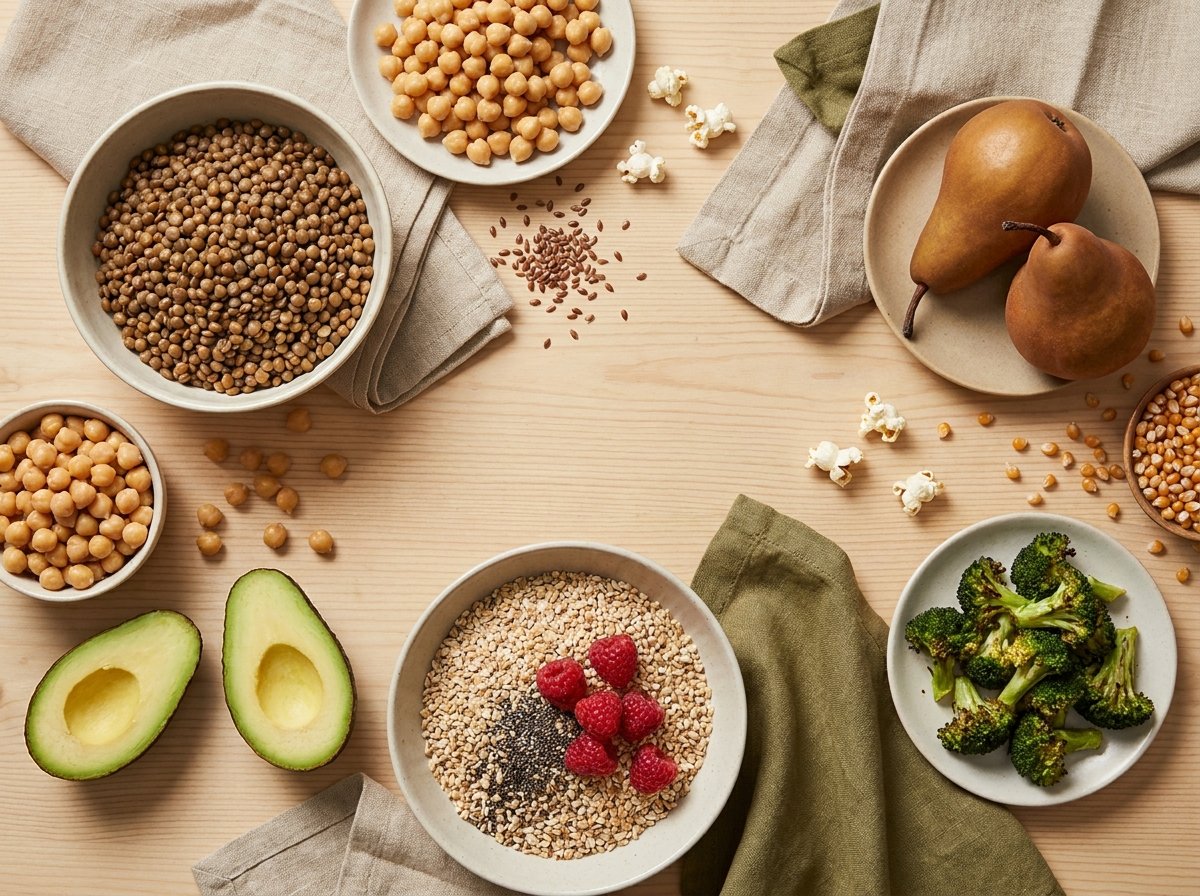
Fibermaxxing has taken over wellness feeds the way protein counting did a couple of years ago, except this time the obsession is with getting as much fiber into a day as possible. The idea is simple: instead of treating fiber as an afterthought, you build meals around it, chasing digestive comfort, steadier energy, and longer-lasting fullness. If you're wondering which foods actually make a dent in your daily total, here's a practical rundown of the ones people keep coming back to.
Legumes are doing most of the heavy lifting
Lentils show up in nearly every fibermaxxing meal plan because a single cooked cup delivers a substantial fiber load while cooking in under 20 minutes with no soaking required. Chickpeas follow close behind, and their versatility, mashed into a dip, roasted for a crunchy snack, or tossed whole into a grain bowl, makes them easy to eat several times a week without getting bored. Black beans round out the trio, bringing a similar fiber profile along with a texture that holds up well in soups and burrito bowls.
Whole grains worth building a plate around
Oats are the obvious starting point, partly because they're cheap and partly because the soluble fiber in them has a genuine track record for supporting healthy cholesterol levels. Barley tends to get overlooked, but it actually outpaces many trendier grains for fiber content and works well swapped into soups or grain salads. Quinoa offers a smaller but still meaningful boost, plus the added benefit of complete protein, which matters if you're trying to balance a high-fiber diet rather than let it crowd out other nutrients. Even popcorn counts here. Air-popped without a drowning of butter, it's technically a whole grain and a surprisingly efficient way to add fiber to a snack.
Fruits and vegetables that pull their weight
Raspberries are one of the highest-fiber fruits available by volume, which makes them an easy add to oatmeal or yogurt without much effort. Pears, eaten with the skin on, offer a similar advantage and travel well as a grab-and-go option. Avocado brings fiber alongside healthy fats, so it does double duty in a way most fruits don't. On the vegetable side, broccoli stands out not just for fiber but for the way it holds texture when roasted, steamed, or thrown into a stir-fry, making it one of the easier vegetables to eat in larger quantities.
Small additions that add up fast
Chia seeds are almost cheating when it comes to fibermaxxing since a couple of tablespoons stirred into a smoothie or turned into pudding contribute a notable chunk of a daily target. Ground flaxseed works similarly and blends easily into baked goods or oatmeal without changing the flavor much. Whole wheat pasta is worth mentioning too, since a simple swap from refined pasta can meaningfully raise the fiber content of a meal people already eat regularly.
How much fiber you actually need, and where fibermaxxing can go wrong?
Most adults fall well short of the recommended daily fiber intake, which sits in the range of 25 to 35 grams depending on age and sex. That gap is exactly what's driving interest in fibermaxxing in the first place. Where things get tricky is when people try to close that gap too quickly. Jumping from a low-fiber diet to 40 or 50 grams in a single day is a common way to end up with bloating, gas, or discomfort, and it's rarely necessary. A gradual increase over one to two weeks, paired with steady water intake, is far more sustainable than trying to hit a fiber target overnight. It's also worth being skeptical of packaged snacks marketed around the trend. A fiber-fortified bar or drink can technically boost a number on a label while offering far less nutritional value than a handful of lentils or a bowl of oats.
Fibermaxxing works best when it stays rooted in whole foods rather than turning into a chase for the highest possible number. Start with one or two swaps, like trading white rice for barley or adding a spoonful of chia seeds to your morning routine, and let your digestive system adjust before pushing further. Done that way, fibermaxxing becomes less of a trend and more of a habit that actually sticks.
Frequently Asked Questions
What exactly is fibermaxxing?
Fibermaxxing is the practice of deliberately increasing daily fiber intake through whole foods such as legumes, whole grains, fruits, and vegetables. It gained popularity through social media as people looked for practical ways to support digestion and overall gut health.
Is fibermaxxing actually good for weight loss?
Fiber-rich foods tend to increase fullness, which can make it easier to manage portions, but fibermaxxing on its own isn't a guaranteed weight-loss method. It works best as part of an overall balanced eating pattern rather than a standalone strategy.
How much fiber should I be eating each day?
Most adults should aim for roughly 25 to 35 grams of fiber daily, though the exact number varies by age and sex. Very few people currently hit that range, which is part of why fibermaxxing has caught on.
Can eating too much fiber cause problems?
Yes, increasing fiber too quickly can lead to bloating, gas, or digestive discomfort. It's generally better to raise intake gradually over a week or two while drinking enough water.
Do fiber-fortified snacks count toward fibermaxxing goals?
They can contribute to your daily total, but many fortified products are less nutrient-dense than whole foods. Prioritizing beans, whole grains, fruits, and vegetables tends to offer more nutritional value alongside the fiber itself.